I have to admit that I never really liked the book trailer video idea. Using video to advertise a movie or video game seems entirely appropriate, but advertising something that is text just seems wrong. However, after almost three years of people advising me to give it a go, I have and I'm not too sure how to rate the results. If it was a movie I'd use clips to give some idea of the cast, effects and style etc., but that's not really an option with a novel.

Science fiction and space exploration. See news, progress reports and special offers on novels in the growing Astronomicon Universe.
Showing posts with label e-book. Show all posts
Showing posts with label e-book. Show all posts
Wednesday, 11 January 2017
My 1st Attempt at a Book Trailer
I have to admit that I never really liked the book trailer video idea. Using video to advertise a movie or video game seems entirely appropriate, but advertising something that is text just seems wrong. However, after almost three years of people advising me to give it a go, I have and I'm not too sure how to rate the results. If it was a movie I'd use clips to give some idea of the cast, effects and style etc., but that's not really an option with a novel.

Wednesday, 19 October 2016
Fifth Astronomicon #scifi Novel out now
Fans of science fiction and followers of the Astronomicon series of novels will be pleased to hear that there is now a second standalone novel set in the ever-expanding Astronomicon universe, bringing the total number to five.

This fifth novel is a departure in style from the previous ones. Its subject matter is lighter, the scenario humorous and the events bordering on farcical. I would not go so far as to categorise it as a comedy but it is strongly leaning that way.
It follows four weeks in the lives of an out-of-work life-support systems engineer and a failed journalist. Starting out in the huge mining community on the moons of Jupiter, they need to get home to Earth within four weeks to meet their respective deadlines.
Life always has a way of being more complicated than you expect and they did not expect an alien intruder, pirates, a covert government agency and some unexpected frozen corpses to get in their way!
Buy the whole e-book on Amazon now.

This fifth novel is a departure in style from the previous ones. Its subject matter is lighter, the scenario humorous and the events bordering on farcical. I would not go so far as to categorise it as a comedy but it is strongly leaning that way.
It follows four weeks in the lives of an out-of-work life-support systems engineer and a failed journalist. Starting out in the huge mining community on the moons of Jupiter, they need to get home to Earth within four weeks to meet their respective deadlines.
Life always has a way of being more complicated than you expect and they did not expect an alien intruder, pirates, a covert government agency and some unexpected frozen corpses to get in their way!
Buy the whole e-book on Amazon now.
Thursday, 18 September 2014
Foundation for a Universe
Long before I started writing the first Astronomicon novel, I began planning the universe in which the stories are set. Although I always planned to write novels and short stories set within the Astronomicon universe, it was never the primary reason for creating such a large and detailed scenario. I was originally working on a computer game, a multi-player real-time strategy game where players choose which species to play, before setting about annihilating all the other species through space exploration, technological development and military proliferation.
.jpg) After several attempts to create the game established that it was a far larger project than could be realised with my resources, I decided that the only practical way to proceed was to write novels set within the universe.
After several attempts to create the game established that it was a far larger project than could be realised with my resources, I decided that the only practical way to proceed was to write novels set within the universe.
With 12 alien races planned out in detail, a wide range of technological development and a projection of Earth history covering the next 200 years, there was a huge amount of potential material for an exciting science fiction novel. The first problem was picking where to begin.
The most obvious place isn't always the most interesting, but in this case most of the potential stories were not going to make much sense unless I introduced the Astronomicon itself, the mysterious device which links all the books. More than that, the title of the entire series needed to be explained, otherwise it would seem oddly abstract. The best way to do that had to be to cover its discovery. Better still, the group of humans who discovered the Astronomicon itself had a back story which was ideal for some classic science fiction. The first book took shape, named Astronomicon: The Beginning, and covering the first interstellar space flight by humans, seeing them survive a concerted effort to thwart their mission to build the first extrasolar colony.
 The second novel, Distant Relatives, seemed to be a natural progression, in that it was set immediately after the first one. It shifts the focus back to Earth and opens with a huge alien invasion of the solar system. We get our first taste of more advanced technology and the human race begins to the see the bigger picture and how they fit into the universe. The colony from book one turns out to be a key element in the ongoing story, uncovering a plot with serious implications for the inhabitants of Earth.
By the end of the second book, my aim was that readers would have a clear measure of the starting technology level and be fully aware of the approaching threat, but would still have no real idea of what technology they might be up against in future. Readers would discover that Earth's history up to the present day is not quite we have been led to believe.
.jpg) After the universe and style of technology were both established, that left me free to explore other stories. Astronomicon: Those Left Behind was originally a contender for launching the whole series, but I think it worked much better as a prequel to the whole story. It filled in the reason for the Eridani race travelling to Earth, revealed some of their motivations and, for the very first time, gave a sense of the scale of the alien threat. We see how the relentless invasion of their home-world and ruthless extermination of their population drive them to execute a vast and daring escape plan. Only a tiny percentage of the population have a chance of getting away, but millions have to make the ultimate sacrifice to make it possible.
After the universe and style of technology were both established, that left me free to explore other stories. Astronomicon: Those Left Behind was originally a contender for launching the whole series, but I think it worked much better as a prequel to the whole story. It filled in the reason for the Eridani race travelling to Earth, revealed some of their motivations and, for the very first time, gave a sense of the scale of the alien threat. We see how the relentless invasion of their home-world and ruthless extermination of their population drive them to execute a vast and daring escape plan. Only a tiny percentage of the population have a chance of getting away, but millions have to make the ultimate sacrifice to make it possible.
I believe that this is the best novel I have written so far. The emotions and motivations of the central characters are stronger than ever before. The "hero" has to overcome fear itself, avoid an alien menace and even go against his own people to save his children from extermination. Although this book is very much a prequel to the first two novels in the series, it also works perfectly well as a stand-alone novel. It's a good way of trying out the Astronomicon series without committing to a series.
After several attempts to create the game established that it was a far larger project than could be realised with my resources, I decided that the only practical way to proceed was to write novels set within the universe.With 12 alien races planned out in detail, a wide range of technological development and a projection of Earth history covering the next 200 years, there was a huge amount of potential material for an exciting science fiction novel. The first problem was picking where to begin.
The most obvious place isn't always the most interesting, but in this case most of the potential stories were not going to make much sense unless I introduced the Astronomicon itself, the mysterious device which links all the books. More than that, the title of the entire series needed to be explained, otherwise it would seem oddly abstract. The best way to do that had to be to cover its discovery. Better still, the group of humans who discovered the Astronomicon itself had a back story which was ideal for some classic science fiction. The first book took shape, named Astronomicon: The Beginning, and covering the first interstellar space flight by humans, seeing them survive a concerted effort to thwart their mission to build the first extrasolar colony.
By the end of the second book, my aim was that readers would have a clear measure of the starting technology level and be fully aware of the approaching threat, but would still have no real idea of what technology they might be up against in future. Readers would discover that Earth's history up to the present day is not quite we have been led to believe.
I believe that this is the best novel I have written so far. The emotions and motivations of the central characters are stronger than ever before. The "hero" has to overcome fear itself, avoid an alien menace and even go against his own people to save his children from extermination. Although this book is very much a prequel to the first two novels in the series, it also works perfectly well as a stand-alone novel. It's a good way of trying out the Astronomicon series without committing to a series.
Friday, 30 May 2014
Everyone can be a "Best Selling Author"

The term "best selling" is almost completely meaningless without proper qualification.
For example, if I self-publish three novels and only one sells any copies at all, that is my "best selling novel", even if it sells a single copy ever!
The term "International Best Seller" is similarly meaningless. The best selling of my own novels (Astronomicon: Icarus), currently sells much better across the Atlantic in the US. As I don't live in the U.S., does that make it "International"?
So far I've found almost 1000 people who claim to be best-selling authors and none of those are very well-known. I always used to think of "best selling" as meaning "sells multiple thousands of copies each month", but clearly this is most unlikely to be true in every case.
I intend to continue resisting the attraction of using the phrases "best selling" or "best seller" to describe any of my books or even to describe myself. My sales are healthy and, from what I gather, I sell more books than the average indie author, but I still feel it's misleading to use the term.
Authors, if you're going to say "best seller" in your status/profile, please ensure you state how you measure that (ie top ten on Amazon). Otherwise "best selling author" means about as much as "magical word wizard" (No offence intended to the magical word wizards out there).
Authors mostly know this, but do our readers?
Monday, 28 April 2014
#Marketing: More important than #Writing?

It seems that everyone and their dog has written a book and wants me to read it. The quality threshold enforced (to varying degrees!) by traditional publishers no longer applies and now it is a minefield for readers. Ratings and reviews can be, and often are, faked. This has led to a slightly distorted experience for both readers and authors. For example I've found that having a single good review is worse than having no reviews, as people seem to assume that the good review is just written by me. It went from a few sales per week to almost nothing at all as soon as the review was posted. (See more...) I suspect that potential readers assume that a single good review was probably posted by the author.
I know some readers simply won't bother with indie authors because they have been burnt in the past by poorly written or unedited work.
Marketing is a tricky and ever changing area that independent authors simply must learn if they want to sell books. Sadly it seems that charisma, marketing and salesmanship have become more important than the actual quality of writing. Just coming up with a good story and writing it well just aren't enough, if they ever were. It often appears that skill with social networking is vastly more important than any literary abilities.
I don't actually have statistics to back this up, but it certainly appears every month sees more and more budding authors entering the market and trying to sell their wares to a market which is simply not expanding as quickly. Standing out from the crowd keeps getting more difficult and simply writing better probably isn't going to make the difference.
If you want to sell your own books you either need to work extremely hard or have a lot of luck. I don't believe in relying on luck. Long before you publish your first novel, it is important to grow an online following on Facebook, Google+, Twitter and as many other suitable social networks as you have the time to work on. Especially at first your efforts will seem like a waste of time. Having a few dozen or even a few hundred followers is not going to make any difference. Ideally you want to be able to measure your social following in 1,000s or 10,000s.
If you post a link to your latest release on your profile/stream/feed don't expect 100% of those followers to immediately click on it. If you get 20% to click the link you are doing very well. Most people I've spoke too reckon than between 5% and 10% is much more usual if your followers have chosen to follow you because they are interested in your work. If you have gone on Facebook and joined posted "Follow Me!" messages in loads of the groups dedicated to building followings as fast as possible, then your click through rate is probably going to be closer to 0.5%.
Now factor in how many of those people will actually continue on to purchase the book (10% if your blurb is excellent and cover eye-catching) and even thousands of followers will only lead to a handful of sales. If you have followers measured in the 100,000s then decent sales will follow.
Of course it's not this simple. There are many factors that affect your sales, but if you have not thought through and prepared your means of promoting and marketing your novel, then just being an excellent book is not going to make it a best seller.
Thursday, 3 April 2014
Finding your #Genre
When I originally set about writing novels, I thought the whole "genre" issue was no problem at all. My novels were going to be Science Fiction therefore I would place them squarely in the Science Fiction pigeon whole and everything would be fine.
Some groups have made serious efforts to formalise the definitions of each of these, but most authors I've spoken too rarely find that their work falls into a single genre. Some authors manage to pick a key genre and a couple of sub-genres but others, like me, find their output really spans about half-a-dozen genres and various from book to book. This makes it extremely difficult for readers to categorise me.
Now I fully realise the importance of tying your work down to a genre as it makes it easier to market, easier to categorise when submitting it for reviews and book directories, and much easier when you come to talk to agents about it. They tend to prefer a clear cut genre for your work so they know how to pitch it and who to pitch it to. Your children's science fiction vampire romance book is going to be hard to sell no matter how good it is, as publishers won't know what to do with it.
 My first book (Astronomicon: The Beginning) was basically classic sci-fi in style. The protagonists were sent to colonise a planet around another star system, things go wrong and they end up fighting to survive in a hostile environment. However this forms the introduction to a much bigger story of human development, politics, technology, space exploration and ultimately war. This now crosses into Space Opera territory.
The second half of the book strays much more into the politics behind the events of the first half, revealing the civil unrest in the mining colonies on Jupiter's moons and sweeping political changes back on Earth. Military action around Jupiter and an assassination on Earth show that there are much greater problems brewing for the human race as a whole. A hefty part of this could easily be categorised as Military Sci Fi.
 The second book in the series (Astronomicon: Distant Relatives) is more of an action thriller set within a science fiction setting. A first contact situation opens the story, but surprisingly that is soon overtaken by events of a more local nature. Again the story explores some of the politics involved, but also covers events back on the colony from the first book where a mini-war has broken out.
I find it a little depressing that some reviews have referred to this book as a bridging piece between the first book and the ongoing storylines. That was not intended, and the book features a ranges of large-scale key events in the on going story. It is most certainly not a space filler, but I suppose being a bridge is necessary factor in not being the first or last book in a series. That doesn't stop it being an exciting and vital bridge.
 The third book (Astronomicon: Those Left Behind) is in many ways a different creature again. It mainly covers the lives of two characters: The ruler of an alien race desperately trying to salvage something in the face of imminent annihilation of his species, and an office worker striving to save the lives of his two children during an alien invasion.
This splits it equally between Military Sci Fi and Apocalyptic Sci Fi. Of course it still fits in with the ongoing Astronomicon storyline, so it's also Space Opera. Which is the main genre? I genuinely don't know.
Defining a Genre
Experience often complicates things or, at least, reveals more details and complexity than you saw at the beginning. Any Science Fiction author with a book or two behind them will tell you that there is a LOT more to it than that. First of all Sci Fi has a plethora of sub-genres, including Space Opera, Hard Sci Fi, Military Sci Fi, Steam Punk (and a range of other "Punks"), Apocalyptic,Post-apocalyptic, Time Travel, Dystopian and many, many more.Some groups have made serious efforts to formalise the definitions of each of these, but most authors I've spoken too rarely find that their work falls into a single genre. Some authors manage to pick a key genre and a couple of sub-genres but others, like me, find their output really spans about half-a-dozen genres and various from book to book. This makes it extremely difficult for readers to categorise me.
Now I fully realise the importance of tying your work down to a genre as it makes it easier to market, easier to categorise when submitting it for reviews and book directories, and much easier when you come to talk to agents about it. They tend to prefer a clear cut genre for your work so they know how to pitch it and who to pitch it to. Your children's science fiction vampire romance book is going to be hard to sell no matter how good it is, as publishers won't know what to do with it.
How Do I Categorise My Own Books?
The second half of the book strays much more into the politics behind the events of the first half, revealing the civil unrest in the mining colonies on Jupiter's moons and sweeping political changes back on Earth. Military action around Jupiter and an assassination on Earth show that there are much greater problems brewing for the human race as a whole. A hefty part of this could easily be categorised as Military Sci Fi.
I find it a little depressing that some reviews have referred to this book as a bridging piece between the first book and the ongoing storylines. That was not intended, and the book features a ranges of large-scale key events in the on going story. It is most certainly not a space filler, but I suppose being a bridge is necessary factor in not being the first or last book in a series. That doesn't stop it being an exciting and vital bridge.
This splits it equally between Military Sci Fi and Apocalyptic Sci Fi. Of course it still fits in with the ongoing Astronomicon storyline, so it's also Space Opera. Which is the main genre? I genuinely don't know.
So what genre am I?
If I had to place all my books (and myself as an Author) into a single category, I would have to make one up. I would call it "Human Science Fiction". Many readers have told me that they enjoy my books even though they don't usually like science fiction and I am convinced that is due to my books being about people. Events occur in a science fiction setting, sometimes driven by technology, sometimes aliens, sometimes even religion, but I tackle those events from the perspective of the people within the story. You see how bigger events affect the lives of people, how they adapt, the challenges they face, the humour, the emotion and fear. I don't write about a shiny future, ruled by computers and where the whole world is united (like Star Trek). I write human stories where people act according to their ideals, fears, greed, patriotism and emotions. This makes it much easier for everyone to relate and empathise with the characters, even if they don't normally "do" science fiction.Thursday, 27 March 2014
Who thought different countries would buy my e-books so differently!
*For my analysis I'm only going to use sales in primarily English-speaking countries. I do sell a few books in Germany and France etc., but not enough to be statistically viable for analysis.
Astronomicon 1: The Beginning:
Last year this book was my bestseller in the US, but not any more. Now it sells best in Canada, with the UK coming a close second. US sales have become very weak and I have no idea what has changed.Astronomicon 2: Distant Relatives:
This book's sales were always split down the middle between the US and the UK. The pickup rate from the first book to the second was markedly higher in the UK, but I always assumed that as I'm British, American readers might find my writing, especially dialogue, a little alien. Now it sells well in Canada and the UK but US sales have dwindled badly.Astronomicon 3: Those Left Behind:
Annoyingly, this one was never a popular seller. I have always been a little depressed by that as I firmly believe it is the best piece of science fiction I have ever written so far. However it's Canadian sales have increased markedly over the past twelve months and US sales have all but stopped. UK sales have remained pretty static.Astronomicon: Icarus:
By far my best selling book currently, but last year it was selling two copies in the UK for every one sold in the US. Now the US outsells the UK about 6 to 1. Canada also beats the UK hands down on this one and I have no idea why. It seems that:- Canadian readers buy this book and then go on to buy all the other Astronomicon books.
- American readers buy this book with greater enthusiasm but most stop there.
- British readers shy away from this one, instead preferring to begin with Astronomicon: The Beginning.
Conclusions:
Astronomicon: Icarus has benefited from an ongoing 99c offer which has clearly boosted its sales greatly. Maybe US readers are more easily swayed by a low price offer?
If I could persuade US readers to buy my other books after purchasing Astronomicon: Icarus, that would fix my US sales issue. Equally if I could somehow make Icarus as popular in the UK as it is across the Atlantic that would also be a major boost.
Anyway, for now my focus is on writing Astronomicon: Deadline, another standalone novel within the Astronomicon universe. Once that is ready for publication I think I will have to sit back and reassess my marketing efforts. If with each book I write, I learn more, hone my skills and expand my reach into social networking then success can be eventually achieved without relying on luck. Marketing is important but it gets easier with more and better books to market.
Wednesday, 12 March 2014
Still holding the 99c (79p) #offer on #Kindle #novel Icarus

As I've said before, science fiction thriller Icarus has had good reviews and no bad ones but, better than that, almost everyone who buys it seems to go on to buy all the other Astronomicon books. That's the best vote of confidence I could ask for. I should take this opportunity to again say thank you to everyone who has taken the time to review my books. It's nice to get feedback, especially the positive kind, and it helps encourage other people to give my books a try.
The most bizarre thing I've experienced with Icarus is that almost all my sales are on the other side of the Atlantic. The US and Canada account for well over 90% of the worldwide sales. Prior to starting the 99c offer, about 60-65% of my book sales were here in the UK. Why Icarus appeals so strongly to those on the North American continent is a mystery to me. If anyone over there understands why Icarus is SO much more popular over there, please let me know.
You can check out Icarus on your local Amazon website, see more reviews on Goodreads.com or find out more about the whole of the Astronomicon science fiction series on the Official website.
Thursday, 20 February 2014
Getting readers to read your #science-fiction
Selling books is tricky. Most of the indie authors I speak to seem to find it almost impossible, struggling to sell even one book per day. If you are not already well-known, it's hard to persuade people to part with their money. It's a gamble for them but there's a way around that.
 Amazon and Smashwords both provide a try-before-you-buy option that authors can offer to potential customers. The problem seems to be that few readers seem to take advantage of it. We all need to make an effort to remind readers that the facility exists, allowing customers to download a portion of the book to their favourite e-reader device for free. It costs authors nothing and takes away the risk of making a bad purchase for customers.
Over the past months I've also posted free samples in a variety of other places, including Goodreads, my Astronomicon blog and Wattpad. I've given up on Goodreads as I've made no headway at all with that, and my blog doesn't really get enough visitors to make any impact. The only place I've been able to successfully encourage people to take a look at my work is Wattpad.com, and I would not rate that as a great success. Like any popular social site, it's hard to stand out from the crowd and get that all-important word-of-mouth marketing going.
My most successful offering of free chapters has been Astronomicon: The Beginning on Wattpad. I've managed to get a few hundred reads there, but I'm still looking for that elusive means to turn it into tens or even hundreds of thousands.
Over the past months I've also posted free samples in a variety of other places, including Goodreads, my Astronomicon blog and Wattpad. I've given up on Goodreads as I've made no headway at all with that, and my blog doesn't really get enough visitors to make any impact. The only place I've been able to successfully encourage people to take a look at my work is Wattpad.com, and I would not rate that as a great success. Like any popular social site, it's hard to stand out from the crowd and get that all-important word-of-mouth marketing going.
My most successful offering of free chapters has been Astronomicon: The Beginning on Wattpad. I've managed to get a few hundred reads there, but I'm still looking for that elusive means to turn it into tens or even hundreds of thousands.
Sunday, 19 January 2014
Is one good #Amazon review worse than no reviews?
I may have made a mistake recently. I had five novels out on Amazon but, as you would expect, the most recent ones were better than the first ones. I would hate to reach a point where my writing skills are not improving, but an unfortunate consequence is that my older books won't be as good as what I'm writing now. As I've been writing a series of novels which should be read in order, I decided to revamp the first novel.
This wasn't just a quick edit or tweak. Instead I took the first two books, extensively edited them and combined them into one 390+ page novel. It was then submitted to the proofreading and editing process and given shiny new front cover artwork. I am very pleased with the results, but the changes were too great to simply make it a new edition of book one.
So I removed the original book 1 and book 2 from sale and launched the new one as a new release (Astronomicon: The Beginning). As a side-effect I lost all my original reviews, but with renewed enthusiasm I tried to persuade readers to leave reviews and ratings of the revamped book.
My efforts were quickly rewarded with a good review (4 stars and some most positive comments) but that's when the problem started. As soon as the book had one review, sales all but stopped. At first I put it down to the usual random fluctuation in sales, but nothing improved. Even a string of good ratings on GoodReads.com made no difference.
It's been suggested to me that having one good review makes potential readers suspicious. They often assume that I've reviewed my own novel, rendering one good review much worse than no reviews at all.
Has anyone else had similar experiences?
This wasn't just a quick edit or tweak. Instead I took the first two books, extensively edited them and combined them into one 390+ page novel. It was then submitted to the proofreading and editing process and given shiny new front cover artwork. I am very pleased with the results, but the changes were too great to simply make it a new edition of book one.
My efforts were quickly rewarded with a good review (4 stars and some most positive comments) but that's when the problem started. As soon as the book had one review, sales all but stopped. At first I put it down to the usual random fluctuation in sales, but nothing improved. Even a string of good ratings on GoodReads.com made no difference.
It's been suggested to me that having one good review makes potential readers suspicious. They often assume that I've reviewed my own novel, rendering one good review much worse than no reviews at all.
Has anyone else had similar experiences?
Friday, 17 January 2014
Don't forget Icarus is still only $0.99
Whilst working the Trojan asteroid cloud, Captain Taylor and the crew of the deep space mining vessel Icarus discover a mysterious prototype ship drifting in space having suffered a catastrophic failure.
Battling the dangers of the asteroid field, the Icarus crew attempt to rescue the survivors of the stricken ship. Meanwhile a vessel from Earth is coming to deal with the damaged prototype but with a conflicting agenda. After unwittingly discovering the bizarre secret of the prototype vessel, the crew of the Icarus end up fighting for their very survival.
Although it's not the first book in the epic Astronomicon science fiction series, Icarus forms an excellent introduction to the Astronomicon universe. It is a stand-alone novel, but still firmly set in the same technologies, politics and history. It gives you an exciting taste of the Astronomicon universe without committing to the ongoing series.
99c US (or 77p here in the UK) is a bargain for over 160 pages of quality science fiction.
To find out more visit the official Astronomicon website or visit your local Amazon website. There are now four Astronomicon novels and another one on the way soon. The fifth novel, Astronomicon: Deadline should hopefully be published in the third or fourth quarter of 2014.
Battling the dangers of the asteroid field, the Icarus crew attempt to rescue the survivors of the stricken ship. Meanwhile a vessel from Earth is coming to deal with the damaged prototype but with a conflicting agenda. After unwittingly discovering the bizarre secret of the prototype vessel, the crew of the Icarus end up fighting for their very survival.
99c US (or 77p here in the UK) is a bargain for over 160 pages of quality science fiction.
To find out more visit the official Astronomicon website or visit your local Amazon website. There are now four Astronomicon novels and another one on the way soon. The fifth novel, Astronomicon: Deadline should hopefully be published in the third or fourth quarter of 2014.
Sunday, 1 December 2013
Do you always start with the 1st book in a series?
I realise that this will vary depending on the series, but I thought the urge to start with the first would be much stronger with most readers than it appears it is in reality.
Each of the last two novels I chose to read were both members of their respective series, but neither were the introductory novel. I did not deliberately decide to jump in part way through, it was down to which books were physically available at the time. Although I would have preferred to start at the beginning, it was not a strong enough factor to stop me reading either book.
The art for any author is to make any subsequent novels in a series readable and enjoyable without any prior knowledge from previous instalments, whilst satisfying those readers who have absorbed every last detail from previous books. It is a difficult balance to achieve.
 My Astronomicon series of science fiction novels has been moderately successful, but the sales curve has not matched what I expected. I always assumed that the first novel (Astronomicon: The Beginning) would outright sell the best, and then 50-60% of those readers would go on to buy the second novel (Astronomicon: Distant Relatives). Predicting the proportional sales of the third novel (Astronomicon: Those Left Behind) was going to be trickier, but I was hoping for it to sell at least 75% as well as book two.
Everyone has told me that it is clearly the best novel of the three, so I was hopeful that it would get close to matching book two's sales. However, for the last couple of months, book three has been selling more than book one and book two combined! Maybe quality matters much more than position number within a series?
What has your experience been of sales of novels within a trilogy or series?
Each of the last two novels I chose to read were both members of their respective series, but neither were the introductory novel. I did not deliberately decide to jump in part way through, it was down to which books were physically available at the time. Although I would have preferred to start at the beginning, it was not a strong enough factor to stop me reading either book.
The art for any author is to make any subsequent novels in a series readable and enjoyable without any prior knowledge from previous instalments, whilst satisfying those readers who have absorbed every last detail from previous books. It is a difficult balance to achieve.
Everyone has told me that it is clearly the best novel of the three, so I was hopeful that it would get close to matching book two's sales. However, for the last couple of months, book three has been selling more than book one and book two combined! Maybe quality matters much more than position number within a series?
What has your experience been of sales of novels within a trilogy or series?
Tuesday, 26 November 2013
What's the best price for an e-book by an unknown author?

This guide will explain the pitfalls and help you decide on the right price.
Read more...
Do you read excerpts or sample chapters?
Amazon routinely provides the first three chapters of e-books for free. Other publishers and book sales sites usually offer similar arrangements. I've seen a lot of indie authors posting excerpts on their social networking feeds and blogs. There's an awful lot of free material out there for us all to sample.
So, my question is, does anyone actually read it? How often do you think that an unknown author sounds interesting so you download the free sample material and give it a go?
Most people I've spoken to about this seem to have the opinion that reviews and reputation far outweigh the marketing effect of free chapters. How many people actually download the free chapters? How many then don't get around to reading them anyway?
Have you ever had a reader say that they read your sample chapters and then went on to buy the whole book?
Marketing our books is usually the hardest thing for indie authors. It would be helpful if self-publishing sites like Amazon gave authors some helpful stats on pageviews for our books and the number of sample chapter downloads. I would not be surprised if my monthly sample download count is substantially lower than my book sales.
Most people I've spoken to about this seem to have the opinion that reviews and reputation far outweigh the marketing effect of free chapters. How many people actually download the free chapters? How many then don't get around to reading them anyway?
Have you ever had a reader say that they read your sample chapters and then went on to buy the whole book?
Marketing our books is usually the hardest thing for indie authors. It would be helpful if self-publishing sites like Amazon gave authors some helpful stats on pageviews for our books and the number of sample chapter downloads. I would not be surprised if my monthly sample download count is substantially lower than my book sales.
Tuesday, 1 October 2013
What's the best price for an e-book?
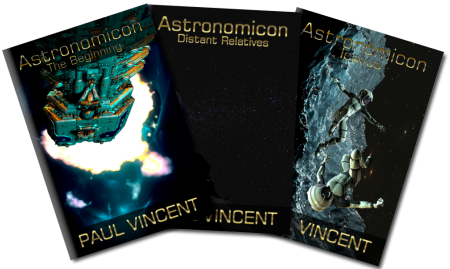
It's still selling at its current price of $3.99, but just not achieving the numbers I need. Although I am making slightly more money from selling fewer at the higher price, this has serious repercussions when you assess the whole series. Just over half the people who buy book 1 go on to buy book 2 (Distant Relatives) and almost all of those go on to buy Book 3 (Those Left Behind). Overall, lower sales of book 1 means less people get introduced to the series and I lose out.
There are so many factors to take into consideration when choosing a price for your novels and sometimes the only way to find out for sure is to try out the variants and see what works best for you.
If you want to find out more, try this article.
Saturday, 10 August 2013
Looking to #promote your E-book on #Facebook?
If you're reading this, you're probably one of the many aspiring authors out there who have one or more e-books desperately looking for more readers. In the last few days an excellent new resource has been created to help you tap into the vast potential audience of Facebook users.
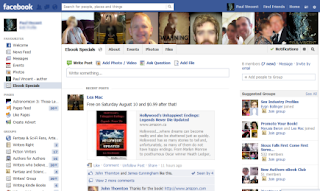
There are a great number of e-book groups, author groups and e-book promotional groups on Facebook. Finding good ones is tricky, finding ones that aren't just full of spam is even harder.
This new group has the advantage of being strongly moderated. Authors are encouraged to post announcement of promotions and freebie offers of their e-books but all posts are checked to ensure that everything is on topic and suitable for the group. We trying to foster a friendly and helpful atmosphere where authors can learn to maximise their potential and reach an ever growing number of potential readers.
Click here to see the Ebook Specials group.
There are a great number of e-book groups, author groups and e-book promotional groups on Facebook. Finding good ones is tricky, finding ones that aren't just full of spam is even harder.
This new group has the advantage of being strongly moderated. Authors are encouraged to post announcement of promotions and freebie offers of their e-books but all posts are checked to ensure that everything is on topic and suitable for the group. We trying to foster a friendly and helpful atmosphere where authors can learn to maximise their potential and reach an ever growing number of potential readers.
Click here to see the Ebook Specials group.
Subscribe to:
Posts (Atom)